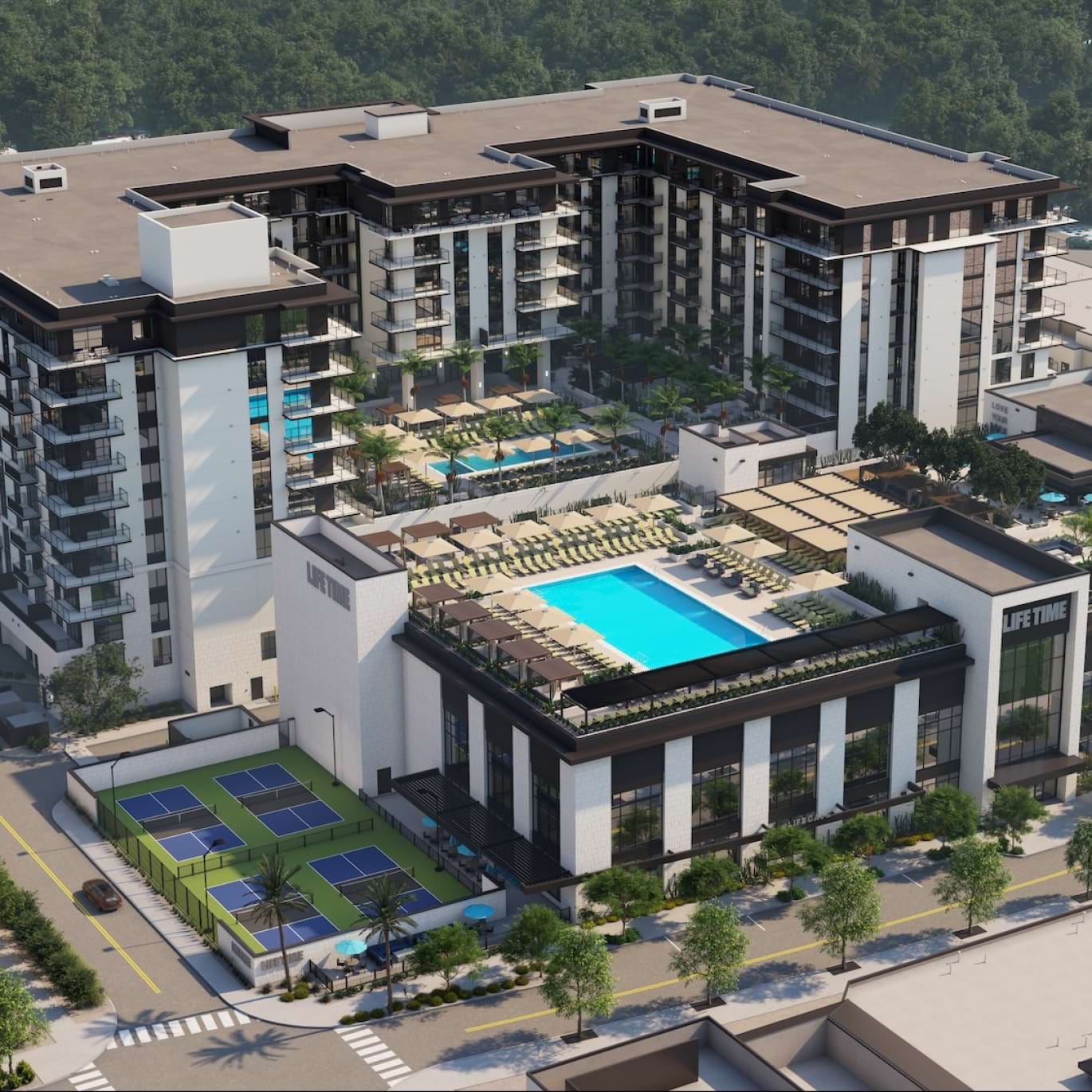
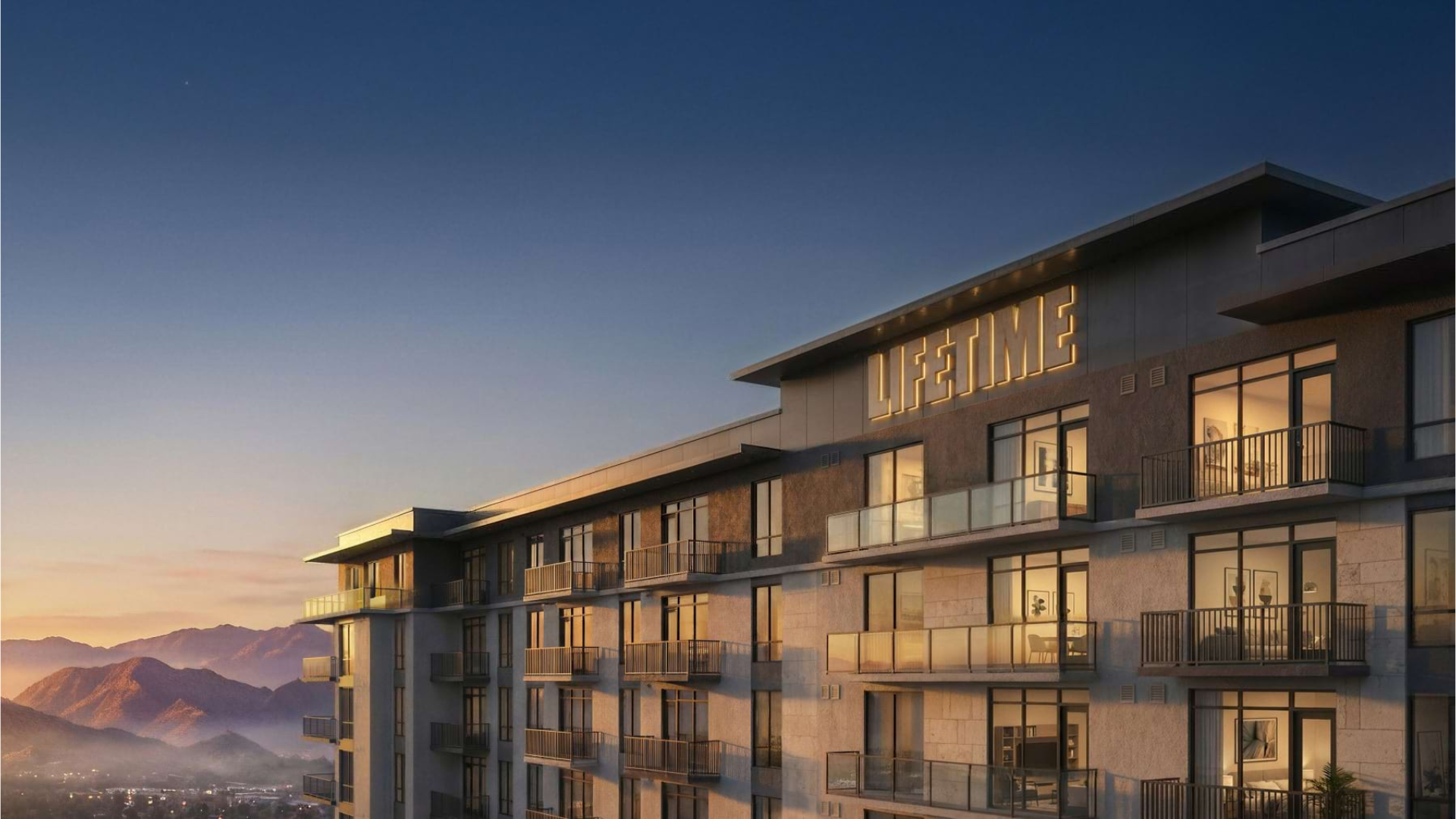
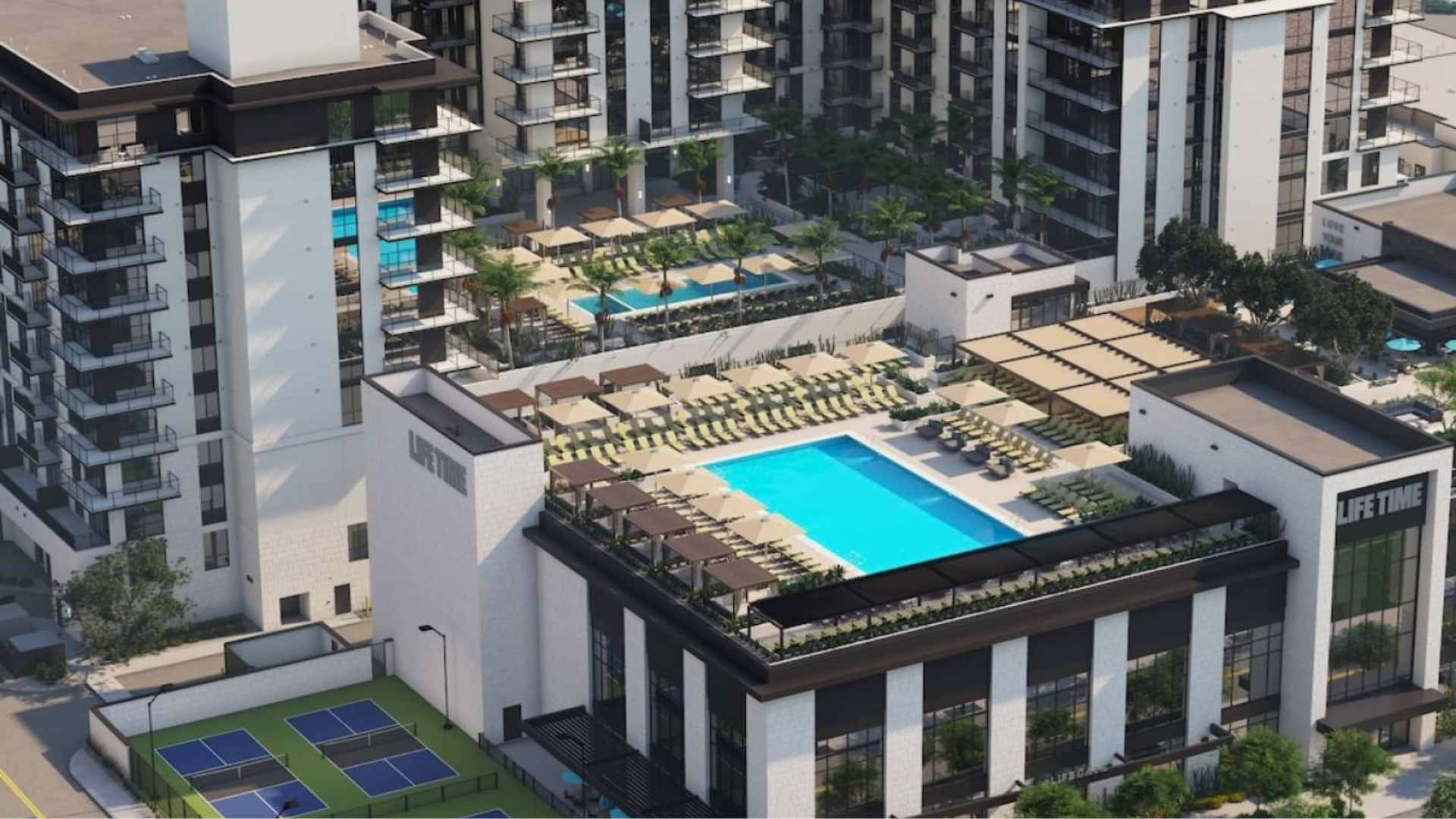
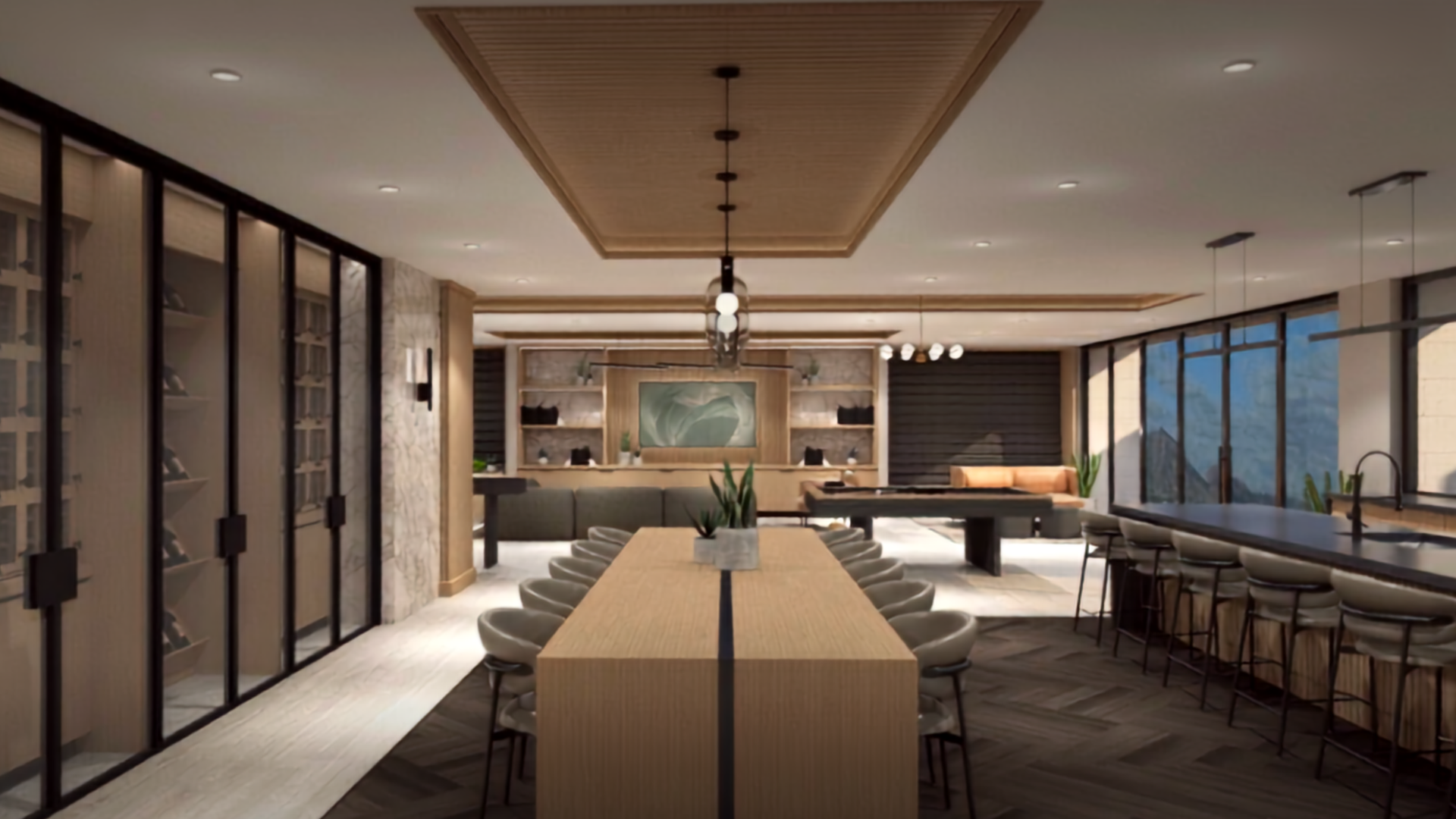
In Phoenix, on the site of the old Paradise Valley Mall, Life Time is building something the fitness industry has mostly talked about rather than done. Alongside a 92,000-square-foot athletic club sits an eleven-story building of 327 rental residences, connected to the club by a pedestrian bridge, with a Life Time membership written into every lease.
The pitch is simple enough to put on a sign: live where you train. The more interesting part is what it says about where the industry believes its growth is going.
Key takeaways
- Life Time is building 327 rental residences next to a 92,000-square-foot athletic club in Phoenix, with membership written into every lease.
- Life Time Living spans six communities open or underway, several built on former retail sites.
- The Global Wellness Institute puts wellness real estate at $876 billion in 2025, forecast to reach $1.8 trillion by 2030.
- Whether bundling membership into rent improves retention is not yet proven; for operators, the lesson is that proximity is a design decision.
From destination to address
For most of its history, the gym has been a destination. You joined one, you drove to it, and the business spent the rest of the year fighting the thing that pulls members away: the rest of their lives. Life Time Living inverts that problem. If the club is downstairs, the trip that quietly kills consistency mostly disappears.
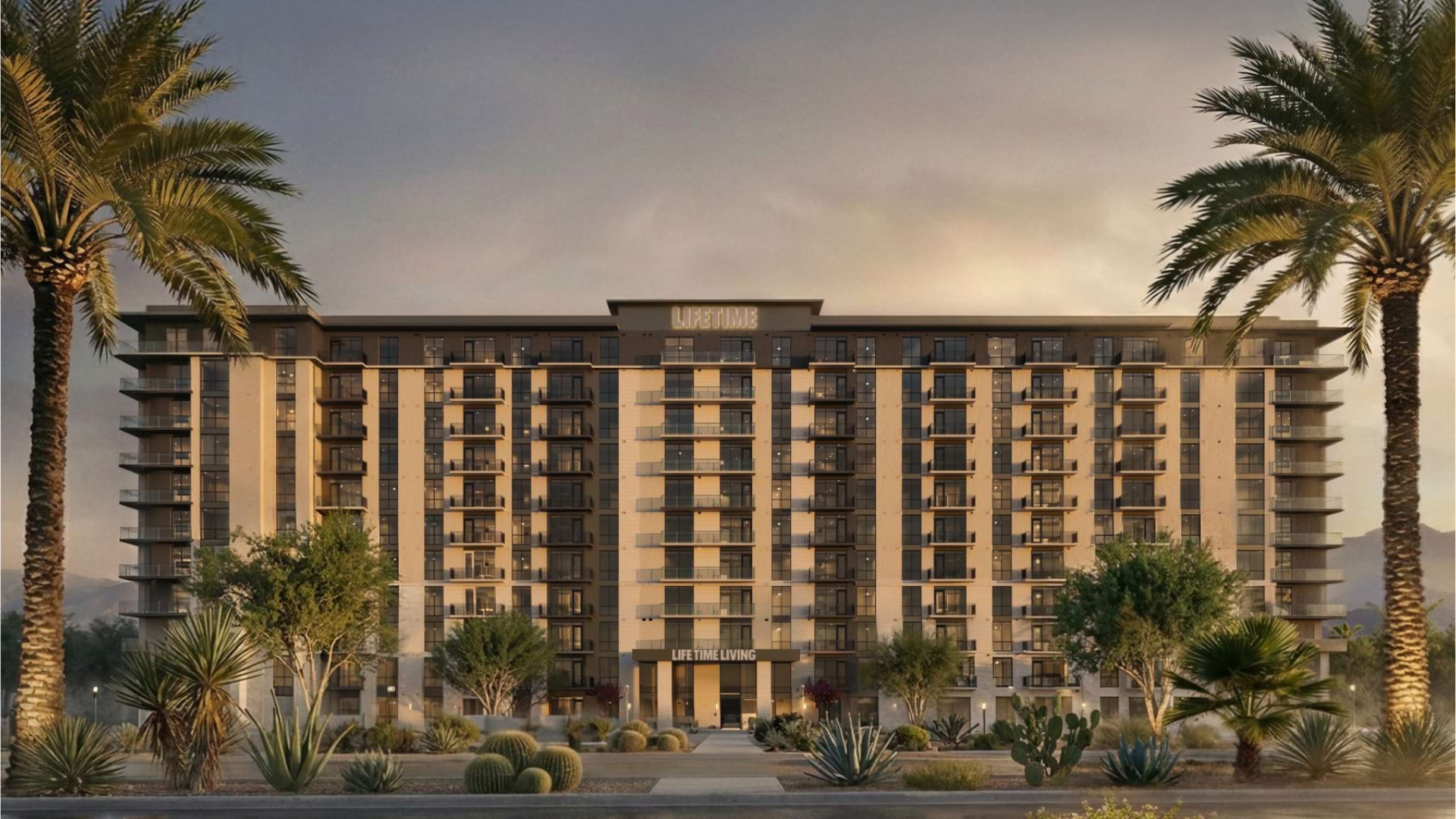
Life Time is not the first to try this. Equinox put a residential tower on the idea in 2019 at 35 Hudson Yards. What is new is the attempt to make it repeatable. Life Time Living now spans six communities open or underway, from Coral Gables to Stamford to Phoenix, several built on the bones of dead retail. This looks less like a one-off luxury play than an effort to productize the gym as an address.
Why now
The timing is not an accident. Wellness real estate, the category covering homes and communities built around health, reached $876 billion in 2025 and is forecast to nearly double to $1.8 trillion by 2030, which makes it, by the Global Wellness Institute’s own account, the fastest-growing part of the wellness economy. That figure is far broader than any single project and is better read as a tailwind than as a measure of Life Time’s market. But it explains why a gym operator is suddenly comfortable acting like a developer. The demand for places that build health into the address is real, and it is growing faster than almost anything else in the sector.
It is worth being precise about what is proven here and what is not. This is an asset-light model, with real-estate partners carrying much of the risk, and the residences are for lease, not for sale. Whether bundling a membership into rent delivers the retention Life Time is counting on is a fair question, not yet a settled result. The approach is being scaled and tested, not vindicated.
What it means for operators and developers
The direction, though, is the useful part. For an operator, the lesson is not to go build apartments. It is that the most durable retention tool may be proximity, and proximity is a design decision. Anything that removes friction between a member’s day and the club’s front door, location, hours, layout, the walk from the parking lot, is doing a smaller version of the work Life Time is doing with a pedestrian bridge.
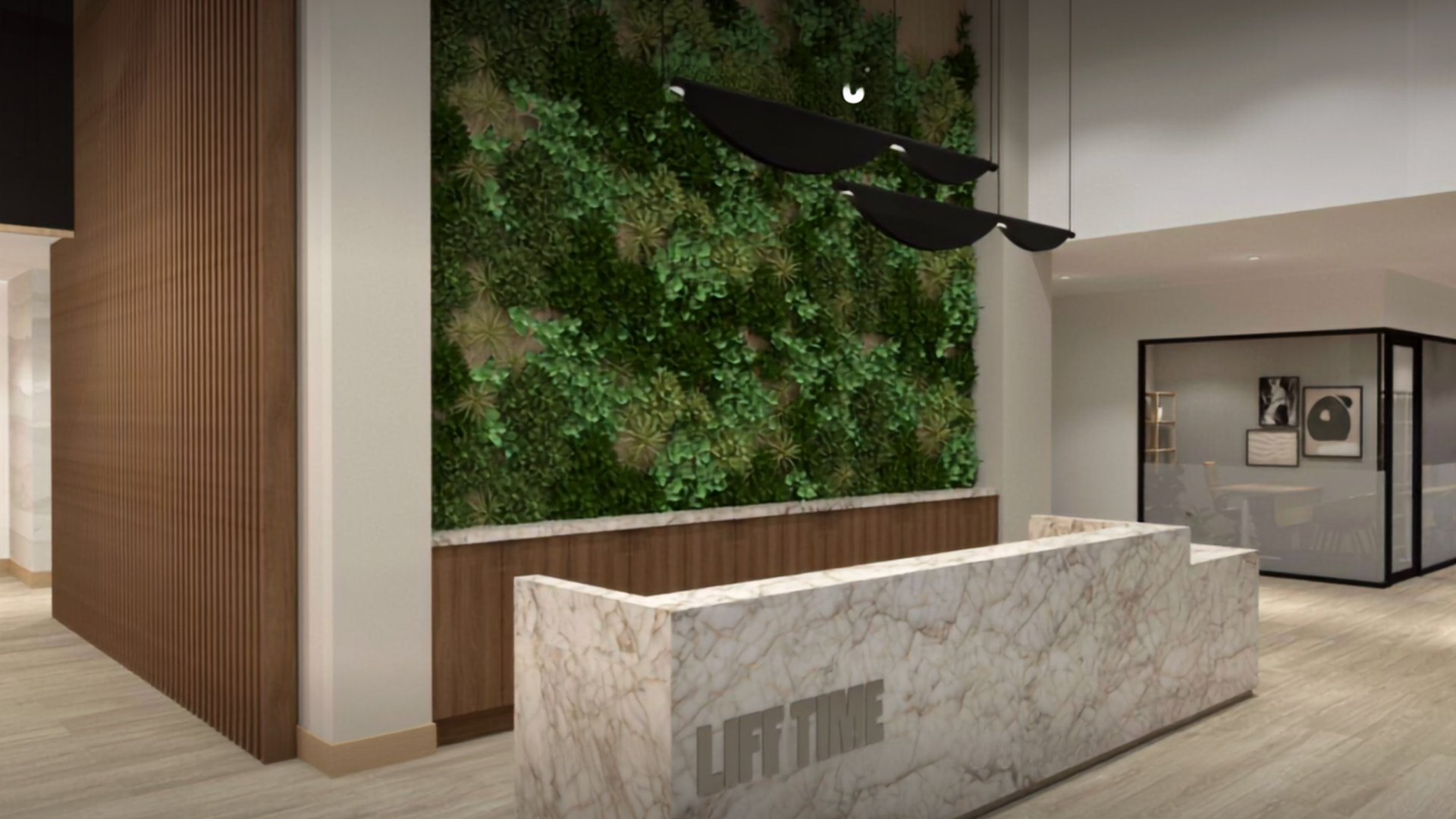
For a developer, the read is more direct. The wellness floor is no longer an amenity added to help units move. Increasingly it is the anchor that moves them. The question worth sitting with on Monday is which side of that shift you are building for.