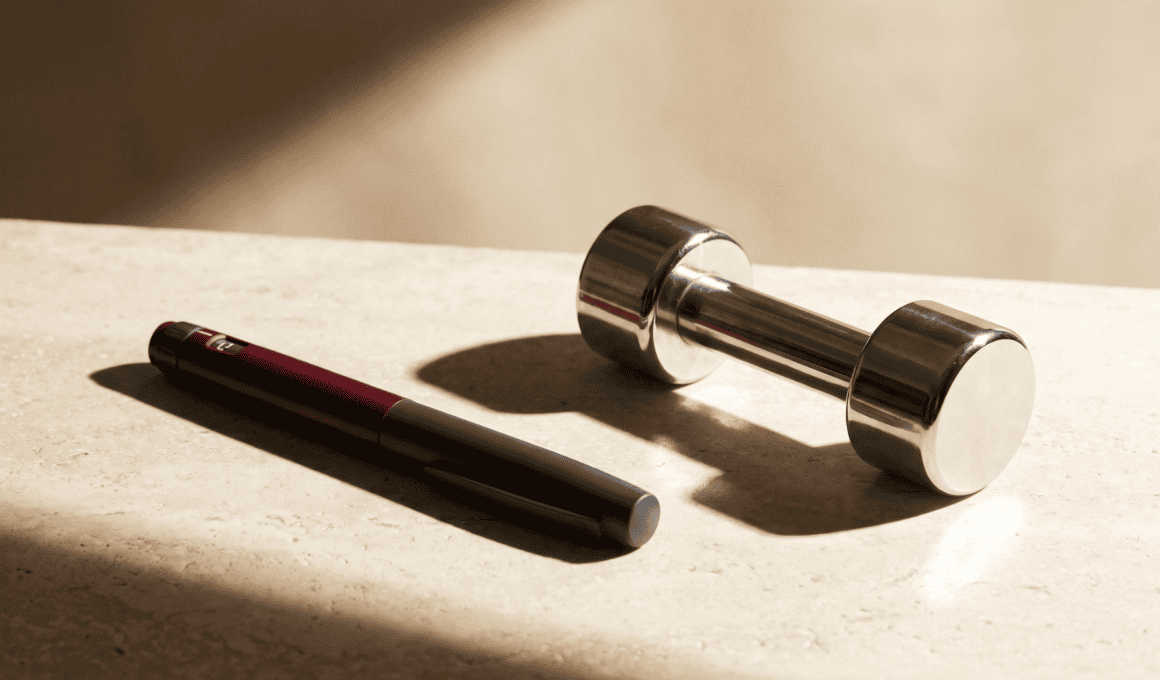
For a few years, the smart worry in the fitness industry was that GLP-1 drugs would empty the gyms. If a weekly injection could do what treadmills and willpower mostly could not, why would anyone keep paying for a membership? The drugs worked, and the fear looked reasonable.
The data has arrived, and it points the other way. According to Gallup, about one in nine American adults, roughly 11 percent, now takes a GLP-1 medication, a figure that has tripled in two years, even as the national obesity rate has begun to fall. The drugs are winning. And the gyms built around them are not emptying. They are filling.
Key takeaways
- About 11 percent of American adults now take a GLP-1 medication, according to Gallup, a figure that has tripled in two years.
- Rather than emptying gyms, GLP-1 drugs are creating a new population with a reason to train.
- A meaningful share of weight lost on GLP-1s is muscle, which is why clinicians pair the drugs with resistance training and higher protein.
- The opportunity for gyms is programming for muscle preservation and measuring body composition, not selling weight loss.
Why the fear was backwards
The mistake was treating weight loss and fitness as the same product. They are not. A GLP-1 takes weight off, but a meaningful share of what comes off is muscle, not only fat, which is why clinicians increasingly pair the drugs with resistance training and higher protein to protect lean mass. The medication solves for the scale. It does not solve for strength, function, or how a body ages, and it creates a large new population of people who suddenly have a concrete reason to walk into a gym.
Some of the largest operators saw this early. Life Time has publicly rejected the idea that GLP-1s threaten the gym, and positioned its medical arm as a companion to the drugs rather than a competitor. That framing is the right one. The drug and the room are not fighting over the same customer. They are two halves of the same outcome.
A GLP-1 is a powerful tool for losing weight. It is not a tool for building a body, and it never claimed to be. That gap is the gym’s to fill.
What an operator does with it
The opportunity is not to sell the drug. It is to become the place people go to make the drug work. That means programming built for muscle preservation, not only calorie burn: strength training, protein guidance, and the kind of measurement, body composition rather than body weight, that shows a member the difference. It means treating a new GLP-1 patient as a high-value member with a clear goal, not a lost cause who no longer needs the gym.
The clubs that struggle will be the ones still selling weight loss, competing head-on with a drug that is better at it. The clubs that grow will be the ones selling everything the drug cannot deliver. The question worth sitting with on Monday is which of those two businesses you are running.