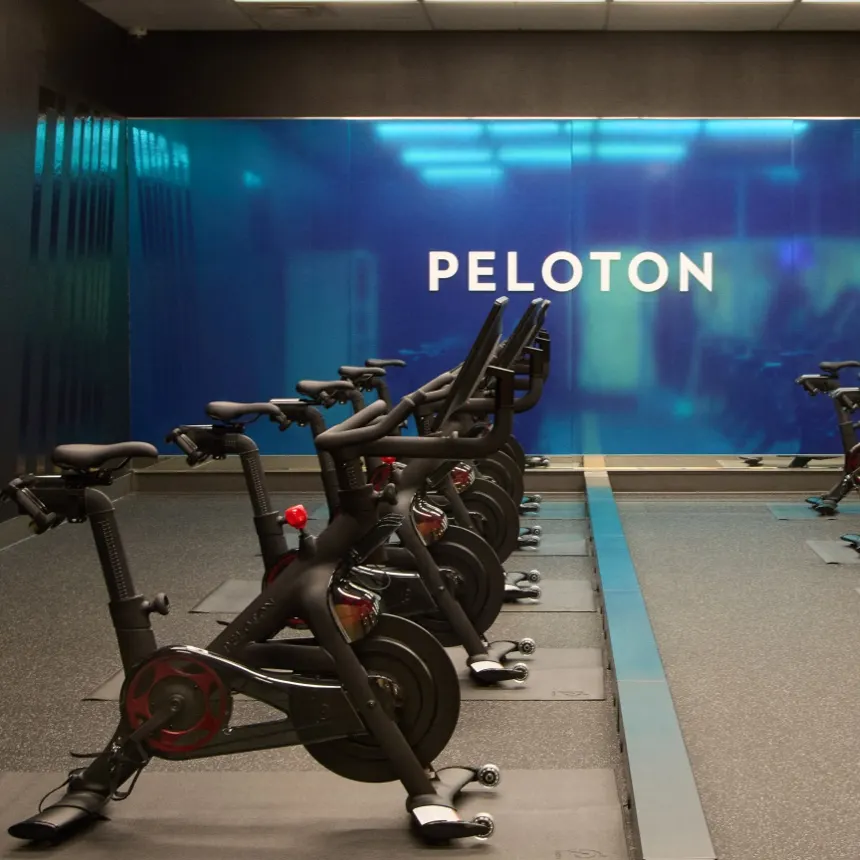
In March, Peloton introduced the Commercial Series, a line of connected fitness equipment built for high-traffic use and aimed at gyms, hotels, and residential buildings. “Peloton is going to the gym,” said its chief executive, Peter Stern. For a company whose original promise was that you would never need to, it is a notable turn, and a rational one.
Peloton spent more than a decade, and at its peak nearly $50 billion in market value, building the case that a great workout could come to you. Now it is building equipment for the room it once positioned itself against. The move is worth reading closely: not as a company stumbling, but as one of the clearer signals in years about where durable value in fitness sits.
Key takeaways
- In March Peloton launched the Commercial Series, connected equipment built for gyms, hotels and residential buildings.
- The line was developed with Precor, starting with a bike and treadmill, with a rower and strength equipment to follow.
- Peloton’s connected-fitness base settled around 2.66 million after the pandemic surge.
- The shift suggests the physical floor and the digital screen are complements, not substitutes.
The original bet
Peloton’s premise, from 2012 on, was elegant. An instructor on a screen could beat a self-led trip to the gym, without the commute, the schedule, or the class fee. For a while the market treated it as more than a product. Revenue grew from roughly $915 million in 2019 to more than $4 billion in 2021, and the stock climbed above $170. The idea that fitness was leaving the building looked, briefly, like the future.
What the last five years showed
Much of that climb, in hindsight, was a pandemic running the experiment at national scale. Gyms were closed, and the at-home model had no competition for two years. When gyms reopened, a large share of members went back, and Peloton’s connected-fitness base has since settled around 2.66 million. The company’s own execution played a part in the correction as well: a factory announced in 2021 and cancelled in 2022, a treadmill recall, an exit from making its own hardware.
It would be unfair to read all of that as a verdict on the company. Peloton built a genuinely loved product and a real, recurring content business. The more useful read is narrower: home-only, on its own, could not carry a business of the size Peloton had built. That is not a failure of ambition. It is information about the category.
Why the floor
Which is what makes the Commercial Series worth attention. Developed with Precor, the commercial-equipment maker Peloton acquired in 2021, it starts with a connected bike and treadmill, with a rower and strength equipment flagged to follow, and targets gyms, hospitality, and multifamily residential when it ships later this year. “We are bridging the gap between the home and the gym,” Stern said. Peloton is not trying to replace the equipment that anchors serious floors; that tier still belongs to names like Keiser, Technogym, and Wattbike. It is choosing to meet members inside the building rather than only in the living room.
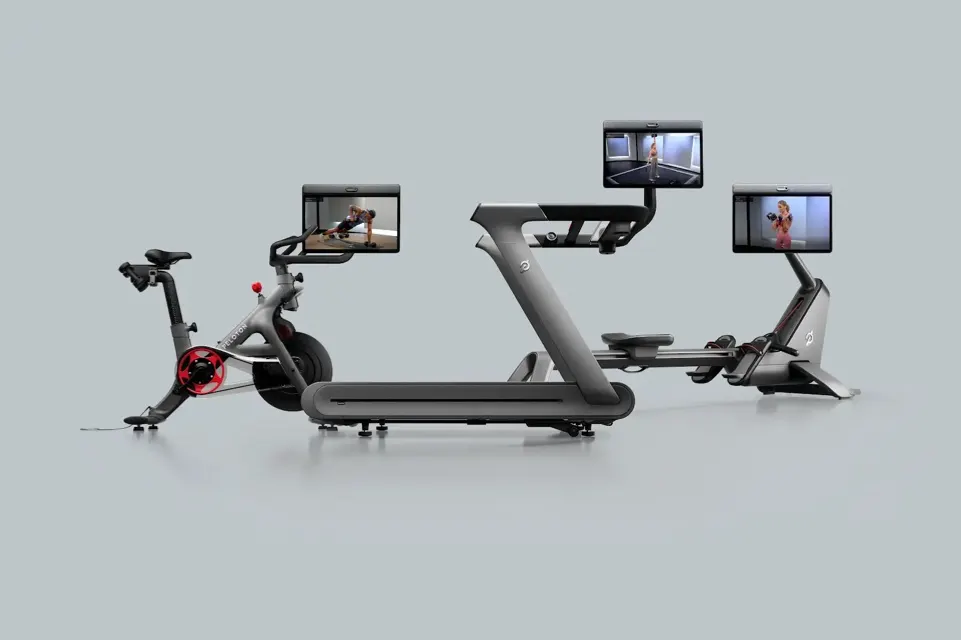
The company that made the strongest case for leaving the gym is now investing to be inside one. That reads less as a defeat than as a signal about where people keep showing up.
What it suggests for operators
If the most digital company in fitness is putting money into the physical floor, the question worth asking is what the floor still does that a screen cannot. The likely answer is the set of things operators sometimes undervalue: the coach who knows a member’s name, the room that pulls someone out of the house, and the community, recovery, and longevity services that are difficult to deliver through a device.
None of this makes the screen a mistake. Peloton’s members are proof it was not. It suggests instead that the physical space and the digital one are turning out to be complements rather than substitutes. For an operator, that leaves a useful question to sit with on Monday: what does the building offer that a member cannot get at home, and is it priced, and built around, as if that were the point? Increasingly, it is.