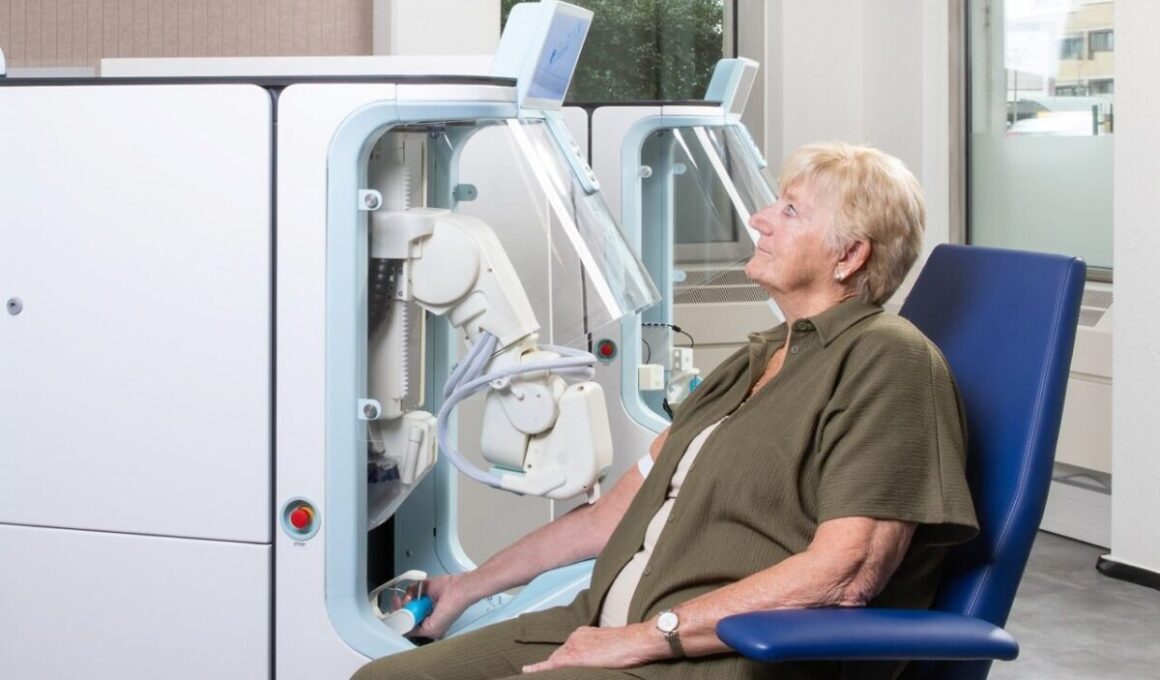
On 19 August the FDA granted marketing authorisation, through the De Novo pathway, to Aletta, made by Vitestro. The agency describes it as the first standalone robotic device that can draw blood from a patient’s arm without hands-on operator intervention. It is authorised for use in adults in outpatient settings, and must be operated under the oversight of a supervisor trained in phlebotomy. One phlebotomist can oversee up to three devices at the same time, which the FDA says “may help address the current phlebotomist shortage in the U.S.”
The agency offers the ratio as a potential public health benefit rather than a commercial one. Michelle Tarver, Director of the FDA’s Center for Devices and Radiological Health, said patients may face delays because of a growing shortage of trained phlebotomists.
That is a regulator naming a workforce problem in the same announcement in which it requires that workforce to supervise the machine. Both halves matter.
What the authorisation says, and what it does not
The FDA relied on clinical data showing the device achieves successful blood draw rates comparable to or better than trained human phlebotomists. Testing covered diverse patient populations, varying health status, difficult vein access and different skin tones. Device-related adverse events were described as uncommon and mild. Special controls were set covering labelling, performance testing and clinical testing.
Tarver also said the authorisation “reflects the FDA’s commitment to advancing innovative medical devices that help meet a critical public health need.”
Three limits are worth holding onto, because the interesting number invites people to run past all of them.
The supervisor is not a spectator. They initiate the process, remain available, confirm collection tubes are filled in the correct order, and verify the tubes are adequately full afterwards. Three devices is not three unattended draws.
The authorisation covers adults in outpatient settings. It does not say what qualifies as one, and it says nothing about non-clinical premises.
And no price is public. An authorisation is not a deployment, and a staffing ratio is not a cost.
The supervisor is not a spectator. Three devices is not three unattended draws.
The operator move
There is a version of this story where robots arrive in gyms. This is not that story, and nothing in the announcement supports it.
What is worth an operator’s attention is narrower. A venous blood draw requires someone qualified to perform it. That is true of a longevity floor, a biomarker programme, a hormone service, and any offer sold on a measured result rather than an attendance record, whether the collection happens in your building or a partner’s. And a federal regulator has just described the supply of those people as a growing shortage.
So the question is not whether to buy anything. It is whether you can answer four things about your own measurement offer: who is qualified to do the collection, whether they are employed by you or by a partner, what your programme does if that person leaves, and whether your partner has told you how they are staffed.
That is answerable today, without a robot, and it is worth checking whether you can.
If your club sells a blood panel, who draws it, and what is your plan if they leave?