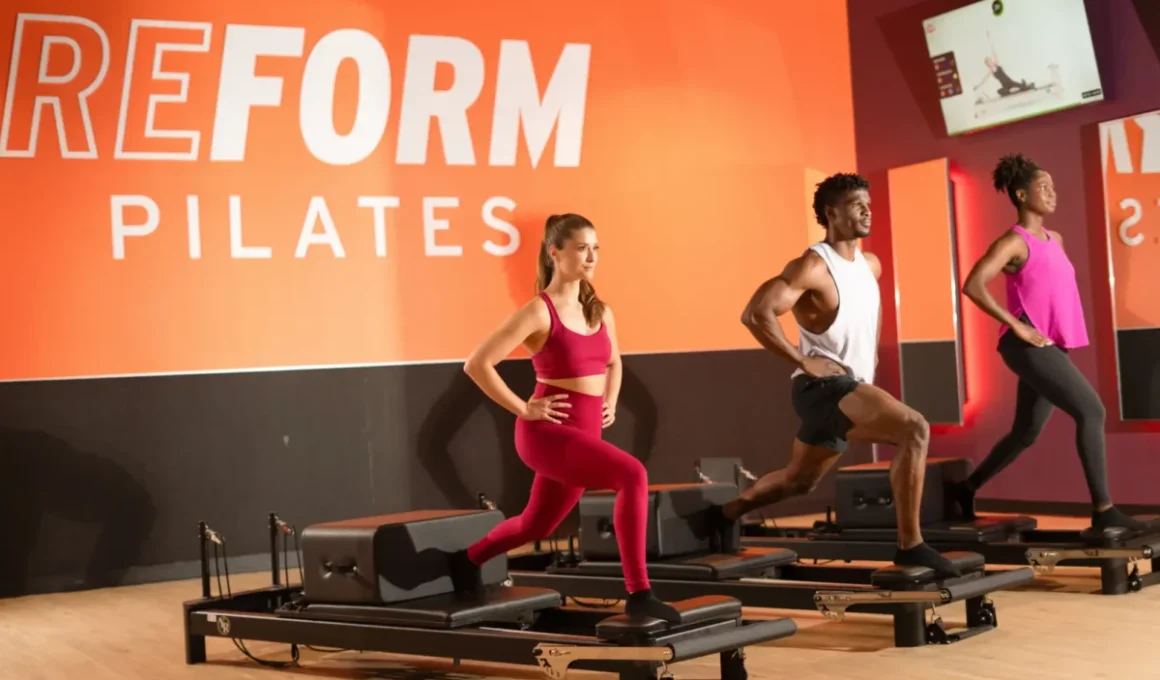
On 3 August, Crunch Fitness set out the studios going into its next-generation clubs: reformer Pilates, a strength training studio, an abs and glutes studio, a boxing studio, and an expanded recovery space carrying contrast therapy, infrared sauna and red light therapy. In the company’s own words, these are “all included with Crunch’s affordable membership.”
That last clause is the whole story, and it went almost unremarked. Crunch describes itself in the same release as “a leading high-value, low-price gym.” What the release does not say is which membership. Crunch runs multiple tiers, and the announcement names none of them.
What is actually included, and where
The specifics are narrower than the announcement sounds, and worth holding accurately. Crunch Reform Pilates debuts in McKinney and Mesquite, Texas. McKinney also gets the new Abs and Glutes studio; Mesquite gets the enhanced Relax and Recover experience. The Pump strength training studio and the Spar boxing studio are described as rolling out to future locations over time. Franchisees have flexibility over which concepts they take. So this is a rollout with named pilots, not a fleet-wide retrofit completed tomorrow.
Nor is this equipment in an empty room. Crunch says the Pilates classes blend “hands-on, instructor-led training with integrated virtual guidance,” describes Pump as “coach-led programming with digital guidance,” and calls Spar “instructor-led and digital programming.” The delivery model is hybrid, and a person is in the room.
The direction is unambiguous though. Crunch reports more than four million members and more than 550 gyms worldwide across 41 states, the District of Columbia, Australia, Canada, Costa Rica, Puerto Rico and India. A company that size deciding that reformer Pilates and contrast therapy belong inside a low-price gym is setting a reference price whether or not it intends to.
Separately, Crunch continues to develop Select, its premium format, whose first next-generation location is due in Long Beach, New York later this year. The two formats run in parallel. Select is its own kind of club in its own markets, not a tier sitting inside a standard Crunch.
The question is no longer whether a low-price gym can deliver the modality. It is what you can still charge extra for, once someone large is including it.
The operator move
For most of the last decade the boutique studio’s defence against the budget gym was that the budget gym could not deliver the experience. Not the equipment, not the instructor, not the room. That defence held while it was true.
The exposure now is narrow and specific. It is not the studio charging seventy dollars for a class taught by someone excellent in a room built for it. That has never competed with a budget gym on price and does not need to. The exposure is the operator charging a modest premium for access to a modality, without a coach, a standard or a result attached to it. That is the position being squeezed, and Crunch is not including equipment alone. It says an instructor is in the room.
So price the thing you actually sell. If reformer is a paid add-on at your club, work out what a member is buying beyond the machine: who is teaching, what they are qualified in, what gets measured, and what the member can do in twelve weeks that they cannot do now. If the honest answer is access to the equipment, that line item is on borrowed time.
When a member asks on Monday why your Pilates costs extra, what is the sentence?