An employer health benefits budget looks like a fixed number until the year it isn’t. Mercer’s early results for 2027 put next year in the second category.
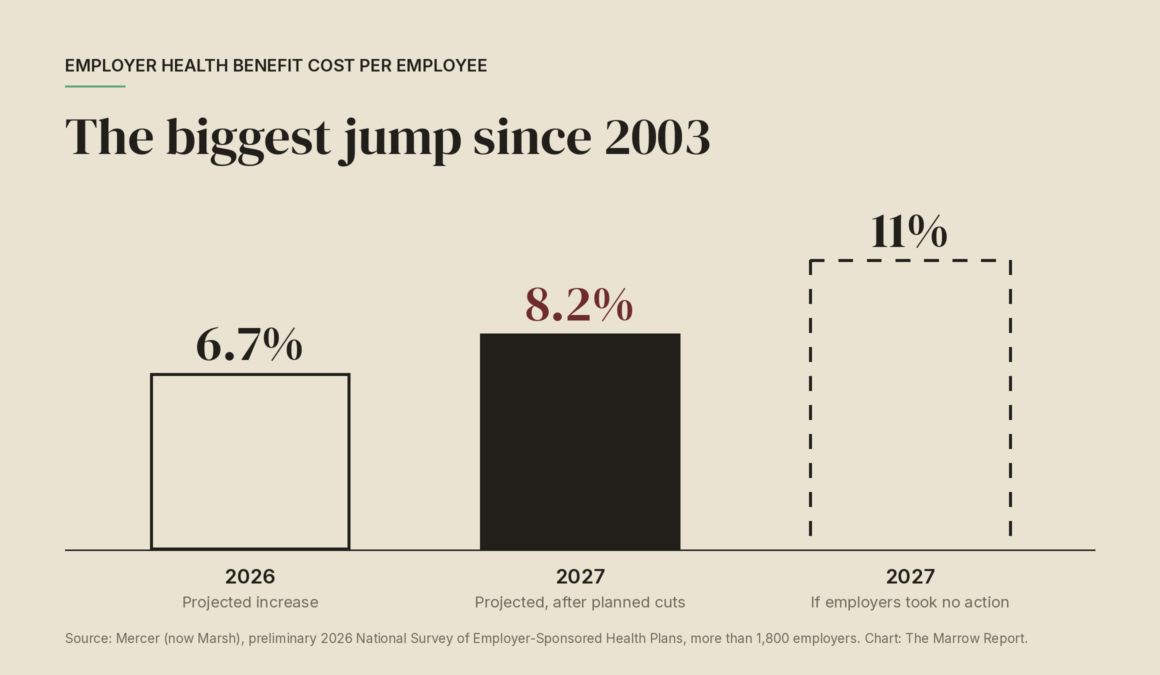
Mercer, which is rebranding as Marsh, published preliminary results from its National Survey of Employer-Sponsored Health Plans on August 31, 2026, drawn from more than 1,800 employers through August 10. They project an 8.2% rise in total health benefit cost per employee for 2027, which Mercer says would be the largest increase since 2003. Mercer said 2027 would be the fifth consecutive year of elevated cost growth and the highest increase in that stretch, up from an average projected increase of 6.7% for 2026. Without any cost-cutting changes, employers expected an average rise of 11%, according to Mercer, so the 8.2% figure already reflects planned cuts.
Mercer’s actuaries attribute about one percentage point of the 2027 rise to rising GLP-1 use, roughly an eighth of the total projected increase. Mercer’s analysis also points to provider consolidation, which gives larger health systems more bargaining power in price negotiations, and rising costs tied to the No Surprises Act’s dispute resolution process, as separate contributors to the same 2027 increase. In response, 59% of employers plan to make cost-cutting changes for 2027, according to Mercer.
Key takeaways
- Mercer’s preliminary survey of more than 1,800 employers projects an 8.2 percent rise in health benefit cost per employee for 2027, the largest increase since 2003.
- Mercer says 2027 would be the fifth consecutive year of elevated cost growth, up from an average projected increase of 6.7 percent for 2026.
- Mercer’s actuaries attribute about one percentage point of the 2027 rise to rising GLP-1 use, roughly an eighth of the increase.
- Provider consolidation and costs tied to the No Surprises Act dispute process are named as separate contributors.
- 59 percent of employers plan cost-cutting changes for 2027. Without them, employers expected an average rise of 11 percent.
A Budget Under Pressure
An 8.2% increase, even after employers make cuts, means the money available for everything else in a benefits budget is getting squeezed. GLP-1 costs are only one contributor, about an eighth of the total increase, but they’re a contributor in a year where the whole budget is already under more pressure than it’s been in over two decades.
GLP-1 costs are only one contributor, about an eighth of the total increase, but they’re a contributor in a year where the whole budget is already under more pressure than it’s been in over two decades.
What an Operator Does With It
Corporate wellness programs, gym benefits, and weight management offerings all sell into this same budget. When 59% of employers are actively cutting costs, a wellness line item that isn’t clearly tied to a cost outcome is a more vulnerable line to cut than it was last year.
If 59% of employers are cutting health benefit costs next year, can you show the employers you work with exactly what their spend on your program is buying them?